As temperatures drop this winter season, it doesn’t take long to notice if your home struggles to stay warm. Drafty rooms, uneven temperatures, and sky-high heating bills can all point to efficiency issues. Preparing your home for winter isn’t just about making one fix, but about how well different home improvement strategies work together to trap heat and keep the cold out.
In this guide, we’ll take a walkthrough of your home from top to bottom and explore how heat escapes and where improvements can make the biggest difference. By layering upgrades like insulation, air sealing, and efficient heating systems, homeowners can create a more comfortable space while reducing energy use and costs along the way.
Starting From the Top: The Attic
The attic is one of the most important and often overlooked spaces when it comes to energy efficiency. Warm air naturally rises, and if your attic isn’t properly insulated, you could be losing warmth (and money) through the roof, causing your heating system to work harder.
Air Sealing
Before starting any insulation project, consider sealing the space first to prevent major air leaks. Even small gaps around ducts, pipes, attic hatches, or light fixtures can allow warm air to escape and cold air to enter. By taking the time to properly seal these gaps before adding insulation, you’ll improve energy efficiency, maintain a consistent indoor temperature, and get the best performance from your insulation investment. Check out this DIY Guide to Sealing and Insulating with ENERGY STAR to learn more.
Insulation
Insulation plays a key role in keeping your home comfortable and energy-efficient by slowing the movement of heat in and out of a building. It helps keep homes warmer in the winter and cooler in the summer. Thermal resistance is measured by the R-value, which indicates how well the material stops heat flow. The higher the R-value, the better the insulation’s thermal performance. High-quality insulation reduces the need for constant space heating and water heating, which in turn produces fewer greenhouse gas emissions and reduces utility costs. The table below outlines the recommended insulation levels for different climates, depending on whether your attic is already insulated or not.

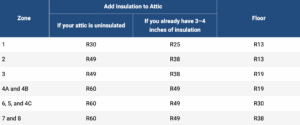
Image Source: ENERGY STAR
Next Stop: Bedrooms and Shared Spaces
Bedrooms and shared living spaces are areas where we tend to spend most of our time, which means comfort should be a priority. Addressing energy upgrades can improve comfort while reducing energy use during Colorado's cold, dry winters.
Cover or Replace Drafty Windows
 According to the U.S. Department of Energy, about 30% of a home's heat energy is lost through windows. Drafty or single-pane windows allow warm air to escape and cold air to creep in, making rooms feel chilly even when the heat is running. Temporary fixes like thermal curtains or window coverings can help block drafts and improve comfort right away.
For long-term impact, consider upgrading to double-pane or adding low-emissivity (low-e) storm windows to your current windows to reduce heat loss. Look for storm windows with a low U-factor and products with a higher Solar Heat Gain Coefficient. These modern window technologies are designed to better insulate homes, and in many cases, can provide similar comfort and energy benefits to a full window replacement, at a third of the cost. For homeowners looking to balance comfort upgrades with affordability, check out these two accessible financing programs administered by CCEF.
Air Sealing (Again!)
Gaps around windows, doors, baseboards, and electrical outlets allow warm air to escape and cold air to enter, forcing heating systems to work overtime. Sealing these leaks with caulk or weatherstripping is a low-cost strategy that doesn’t require major renovations and delivers immediate results.
Doors are excellent places to apply weatherstripping, as they open and close frequently and often have gaps along the jambs or at the bottom where heat can escape. Here are some tips to keep in mind when installing weatherstripping yourself:
- Apply weatherstripping material to clean, dry surfaces above 20°F (-7°C).
- Measure surface area before cutting
- Fit snugly so the material compresses when closed
- Use proper door sweeps or thresholds
- Weatherstrip the full door jamb with continuous strips
- Ensure strips meet tightly at corners
Revisiting air sealing every few years is especially helpful as homes naturally shift and materials age, but if you’re still not feeling improvements in comfort, it might be worth the investment to fully replace exterior doors.
Fireplaces
If you’re lucky enough to own a fireplace, you know how comforting it can be on a cold winter day, adding warmth and a cozy, inviting ambiance to your home. But what many people don’t realize is how much heat can escape if it’s not properly maintained. Be sure to close the flue and any glass doors or screens when the fireplace isn’t in use. If your hearth features exposed brick or mortar, check regularly for cracks or gaps that may need sealing to help keep heat from escaping.
 Use a Programmable Thermostat
Upgrading to a smart or programmable thermostat gives homeowners greater control over their energy use by automatically making temperature adjustments to accommodate their daily routines, whether they’re asleep or away. According to the U.S. Department of Energy, simply turning your thermostat down by 7–10°F for eight hours a day can reduce heating costs by up to 10% annually. Smart thermostats remove the guesswork from managing your home’s temperature by allowing you to control temperatures remotely from your phone.
Take Advantage of the Colorado Sun
With over 300 days of sunshine each year, homeowners can let nature do some of the work. On sunny days, open curtains and blinds on south-facing windows to let in natural heat. As the sun sets, close them to retain warmth overnight.
If you’re looking for a long-term way to keep energy costs low, it may be the perfect time to consider adding solar panels to your home. Since solar energy powers your home year-round, the savings it provides can help offset higher electricity costs during colder months.
Tip! CCEF helps Colorado homeowners finance solar projects with low, fixed interest rates and no money down. Click here to learn more about RENU and see if it’s a good fit for you.
Beneath It All: The Basement
While basements might not seem like a major source of energy savings, they often house key systems like your furnace and water heater. Because basements can also be affected by weather, there are a few things you can do to keep your heating equipment running safely and efficiently.
Heat Pumps
Heat pumps have become an increasingly popular, energy-efficient alternative to traditional electric resistance heating systems like furnaces or baseboard heaters. Unlike those systems, heat pumps can both heat and cool your home, providing year-round comfort from a single appliance. There are two main types to choose from—air-source heat pumps (ASHPs) and ground-source, or geothermal, heat pumps. According to this MIT Technology Review, modern models are remarkably efficient, producing three to four times more heat energy than the electricity they use, making them one of the smartest options for lowering energy costs and reducing emissions.
Water Heating
According to the U.S. Department of Energy, water heating is the second largest energy expense in most homes. Insulating exposed hot water pipes is a simple upgrade that helps reduce heat loss and can raise water temperature. If your current water heating unit is more than 10 years old, replacing it with a newer, energy-efficient model like a Heat Pump Water Heater can help you save up to $200-$400 annually, depending on usage.
How can CCEF help?
CCEF offers residential programs designed to make it easier for Colorado homeowners to upgrade their homes for better energy efficiency. Whether you’re looking to lower utility bills this winter or make long-term renewable energy upgrades to your home, our programs can help you get there. No matter how you found us through your contractor or while researching energy upgrades, you’re in the right place. Click here to learn more about our accessible financing programs.
In addition to our financing programs, there are a variety of rebates and incentives available to make your project even more affordable. Use this Homeowner Incentive Calculator from our friends at Rewiring America to see how much you might qualify for and start planning your upgrades today.
Conclusion
Preparing your home for winter doesn’t have to happen all at once. Taking it room by room and making small improvements over time can lead to noticeable improvements in comfort and energy savings. While higher utility bills are inevitable during the colder months, staying proactive instead of reactive can help you reduce your energy costs and avoid emergency upgrades later on.
If you’re unsure how to get started, consider performing a home energy assessment to help you identify the most effective home energy upgrades and ensure lasting comfort and warmth throughout the winter. Already have a project in mind? Explore CCEF’s network of authorized contractors and filter by county, energy measure, and more.
Sources:
“Air Sealing Your Home.” Energy Saver, U.S. Department of Energy, https://www.energy.gov/energysaver/air-sealing-your-home.
“Assessment of High-Temperature and Innovative Insulation Thermal Performance.” National Institute of Standards and Technology (NIST), https://www.nist.gov/programs-projects/assessment-high-temperature-and-innovative-insulation-thermal-performance.
“Attic Air Sealing Project.” ENERGY STAR, U.S. Environmental Protection Agency, https://www.energystar.gov/saveathome/seal_insulate/attic-air-sealing-project.
Consumer Reports. “Reasons to Consider a Heat Pump for Your Home.” Consumer Reports, 8 Dec. 2023, https://www.consumerreports.org/appliances/heat-pumps/reasons-to-consider-a-heat-pump-for-your-home-a6507162057/.
“Energy-Efficient Window Coverings.” Energy Saver, U.S. Department of Energy, https://www.energy.gov/energysaver/energy-efficient-window-coverings.
“Insulation R-Values.” ENERGY STAR, U.S. Environmental Protection Agency, https://www.energystar.gov/saveathome/seal_insulate/identify-problems-you-want-fix/diy-checks-inspections/insulation-r-values.
“Prevent Your Warm and Cozy Fireplace from Becoming an Easy Exit for Your Heat.” Energy Saver, U.S. Department of Energy, 14 Dec. 2022, https://www.energy.gov/energysaver/articles/prevent-your-warm-and-cozy-fireplace-becoming-easy-exit-your-heat.
“Programmable Thermostats.” Energy Saver, U.S. Department of Energy, https://www.energy.gov/energysaver/programmable-thermostats.
“Selecting New Exterior Doors.” Energy Saver, U.S. Department of Energy.
https://www.energy.gov/energysaver/doors.
Temple, James. “Everything You Need to Know about Heat Pumps.” MIT Technology Review, 14 Feb. 2023, https://www.technologyreview.com/2023/02/14/1068582/everything-you-need-to-know-about-heat-pumps/