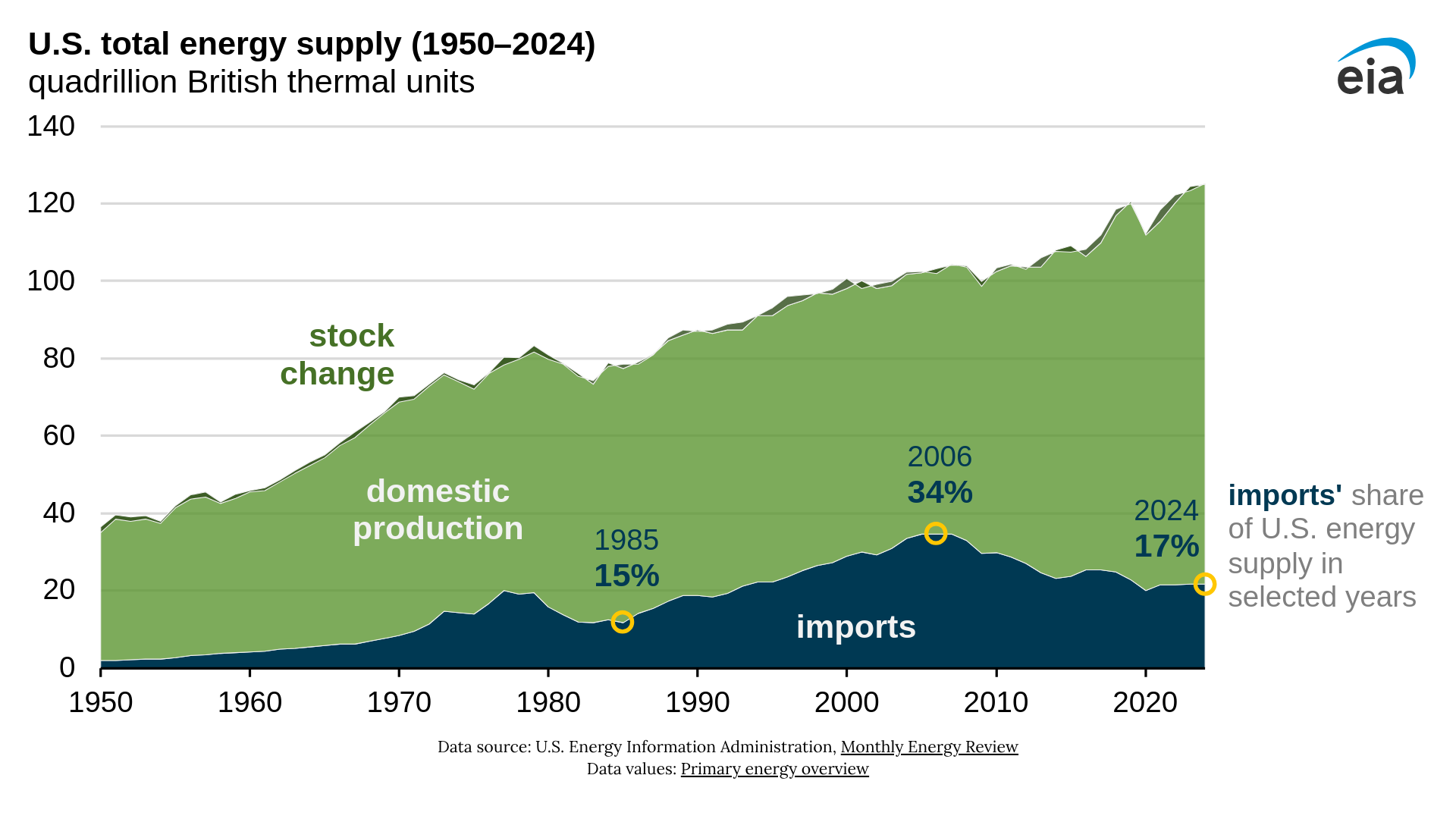
Boosting domestic energy production is important to ensure a more resilient, self-sufficient future. Total U.S. energy supply is trending upward, and the share of domestic energy production has increased over the past 18 years. According to the U.S. Energy Information Administration (EIA), the U.S. imported about 17% of its energy supply in 2024—the lowest share since 1985. This reduced share of energy imports is related to an increase in domestic energy production and a decrease in energy imports since 2006. While this transformation has national implications, it also unlocks powerful opportunities for small businesses looking to cut costs, reduce emissions, and future-proof their operations.
From renewable investments to expanded energy infrastructure, this national shift toward more domestic energy production is a practical, economic opportunity for businesses at every level.
Why Domestic Energy Production Matters
One of the biggest advantages of increasing domestic energy production is enhanced energy security. By reducing our reliance on foreign energy, the U.S. becomes less vulnerable to international supply chain disruptions, price shocks, and geopolitical instability. Global conflicts and price spikes have underscored just how critical this issue is.
The U.S. has expanded its renewable energy capabilities, including wind, solar, geothermal, and even clean hydrogen. With significant investment in modernizing grid systems and upgrading transmission infrastructure, we’re seeing a holistic push toward energy autonomy that benefits producers, consumers, and communities alike.
A More Resilient, Self-Sufficient U.S. Energy Landscape
As domestic energy production grows, so does job creation in exploration, processing, transportation and more—creating opportunities across rural and urban regions. Developing a domestic energy resource can also drive down energy costs for consumers.
For businesses, this stability can mean predictable energy costs. By relying on local energy sources, companies face fewer price fluctuations caused by global markets, transportation bottlenecks, or extreme weather events. This pricing consistency makes it easier to plan budgets and invest confidently in long-term growth.
How Small Businesses Can Benefit
Small businesses stand to gain from this domestic energy shift. There's a clear financial incentive to save on energy costs. The accessibility to onsite renewable and energy efficiency solutions is expanding year over year. Solar panels, energy-efficient HVAC systems, LED lighting upgrades, and more are becoming more affordable, thanks to incentives and financing programs. Many utilities now offer net metering, allowing businesses to sell excess energy back to the grid and reduce their utility bills even further.
Beyond that, small business owners can tap into community solar programs, purchase energy from local providers, or join neighborhood microgrids that offer reduced rates and increased energy security. Alternatively, through programs like demand response, businesses can receive payments for reducing energy usage during peak periods to help balance the grid while saving money. This democratization of the energy economy is leveling the playing field, offering smaller businesses tools once reserved for large corporations.
Sustainability and Brand Value
The benefits of local, renewable energy go far beyond operational costs. With growing pressure from consumers, investors, and regulators, sustainability has become a business imperative. Utilizing domestically produced renewable energy allows companies to significantly reduce their carbon footprint, which is a crucial step in meeting ESG (Environmental, Social, Governance) goals.
Additionally, businesses that show a clear commitment to green practices build stronger relationships with customers who value environmental responsibility. Earning certifications like LEED, Green Business Certification, or Energy Star can set a company apart in a competitive market, enhancing consumer trust and loyalty.
Taking Action: What Small Businesses Can Do Today
It doesn’t take a full energy overhaul to get started. Here are three concrete steps small businesses can take now to benefit from increased domestic energy production:
- Conduct an Energy Audit
Begin by analyzing current energy use. Identify inefficiencies such as outdated appliances, poor insulation, or unnecessary lighting. Many utilities and organizations like Energy Smart Colorado offer free or low-cost energy audits. - Explore Incentives and Financing
There are a number of tax credits, rebates, and financing programs designed to support energy-efficient upgrades. Now is the time to take advantage of tax credits for installing solar, heat pumps, and energy-efficient HVAC systems. - Partner with Local Providers and Programs
Look into community solar projects, local energy cooperatives, or microgrid initiatives in your region. These decentralized options can reduce energy bills and provide more reliable service, especially in areas prone to outages.
The Bottom Line
The U.S. is seeing a transition to more domestic energy production, which increases energy reliability with economic growth. As this share of energy production grows, small businesses in Colorado have a unique opportunity to reap benefits like lower operating costs, increased reliability, incentive programs, and financing support.
No matter what kind of small business you run, investing in energy solutions is a smart business strategy. The financing, incentives, and technologies are already here and now is time to get started.
Interested in financing an energy upgrade project? Visit our commercial loan products here to learn more about our offerings and submit an interest form to get the conversation started.